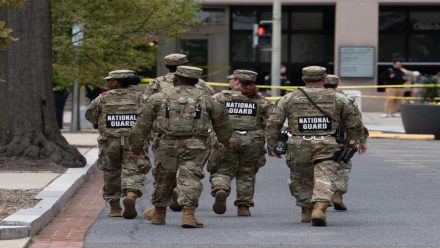
The Trump administration said ICE officers will be stationed at “hotspot” U.S. airports starting Monday to assist with TSA screenings, and that those officers will undergo some training before deployment.
Airport chaos and long TSA lines have returned as TSA screeners work without pay during a partial Department of Homeland Security shutdown. DHS officials told reporters about staffing shortfalls — saying roughly 400 TSA officers have quit since the disruption began and that callouts hit a record high over the past weekend. About 50,000 TSA officers were working without pay due to the funding standoff.
Skyler Henry, reporting from Atlanta, described “tempers flaring” and long waits: travelers in New Orleans queued into a parking garage and at Hartsfield–Jackson Atlanta International bottles of water were being handed out to weary flyers. In Atlanta Henry spoke with Julie Curtis, who said after four hours in line she and her family missed their flight; she and her husband, who has a heart condition, were left stranded.
The shutdown and staffing problems have prompted the administration’s move to bring ICE officers into some airports to help with screening. The White House said ICE will be stationed in certain airports and receive training in the days before they begin assisting TSA.
The announcement has drawn mixed reactions at airports. Some travelers said seeing ICE agents could make people afraid to travel; others expressed support for ICE. The president of the union representing TSA officers criticized the idea, saying, “TSA officers deserve to be paid, not replaced by untrained, armed agents who have shown how dangerous they can be.”
The funding impasse in Congress stems from Democrats’ outrage over an ICE operation in Minneapolis — including the deaths of two people during that operation — and lawmakers’ demands that ICE officers unmask and wear IDs. Lawmakers remain at odds over DHS funding.
Officials have not named which airports will receive ICE officers. CBS News noted there are about 20 U.S. airports that use private security instead of TSA; those airports — including international facilities in Kansas City and San Francisco — have not faced the same staffing disruptions because private security is overseen under different federal arrangements.
The situation comes amid broader travel pressures, including higher fuel costs and airlines cutting flights, which together with spring break travel and the DHS funding standoff contributed to the long security lines travelers faced this weekend.